

Spirulina - The Best Green Food
Spirulina is a microscopic blue-green vegetable algae that has been used as a significant food source for centuries.
We are proud that the MicrOrganics Hawaiian Spirulina has been selected as "Best Sports" Winner in Natural Lifestyle magazine as featured in the Natural Lifestyle February 2012 edition.
Spirulina is thought to have been a food source for the Aztecs in 16th century Mexico, as it’s harvesting from Lake Texcoco and sale as cakes is described by one of Cortés' soldiers. The Aztecs called it Tecuitlatl, which means the stone's excrement. Spirulina was found in abundance at the lake by French researchers in the 1960s, but there is no reference to its use there as a daily food source after the 16th century. The first large-scale Spirulina production plant was established in the early 1970s and drew attention worldwide.
Spirulina Pacifica® is a select strain of Spirulina platensis developed over many years of continuous cultivation in Hawaii. Strain development and perfection started in 1984. Our cultures in Hawaii represent the oldest continuously cultivated and harvested Spirulina in the world. Hawaii's year-round growing conditions and our integrated culture management system have made this possible. Spirulina Pacifica has been extensively analyzed by molecular biologists at the University of Hawaii who identified unique enzymes not previously found in other strains of Spirulina Platensis.
Spirulina Pacifica is a highly absorbable source of protein, mixed carotenoids and other phytonutrients, B-Vitamins, GLA and essential amino acids.
Spirulina - Health and Fitness
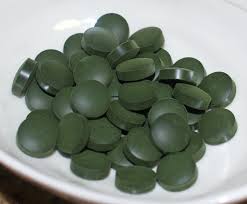
Spirulina's concentrated nutrition makes it an ideal food supplement for people of all ages and lifestyles.
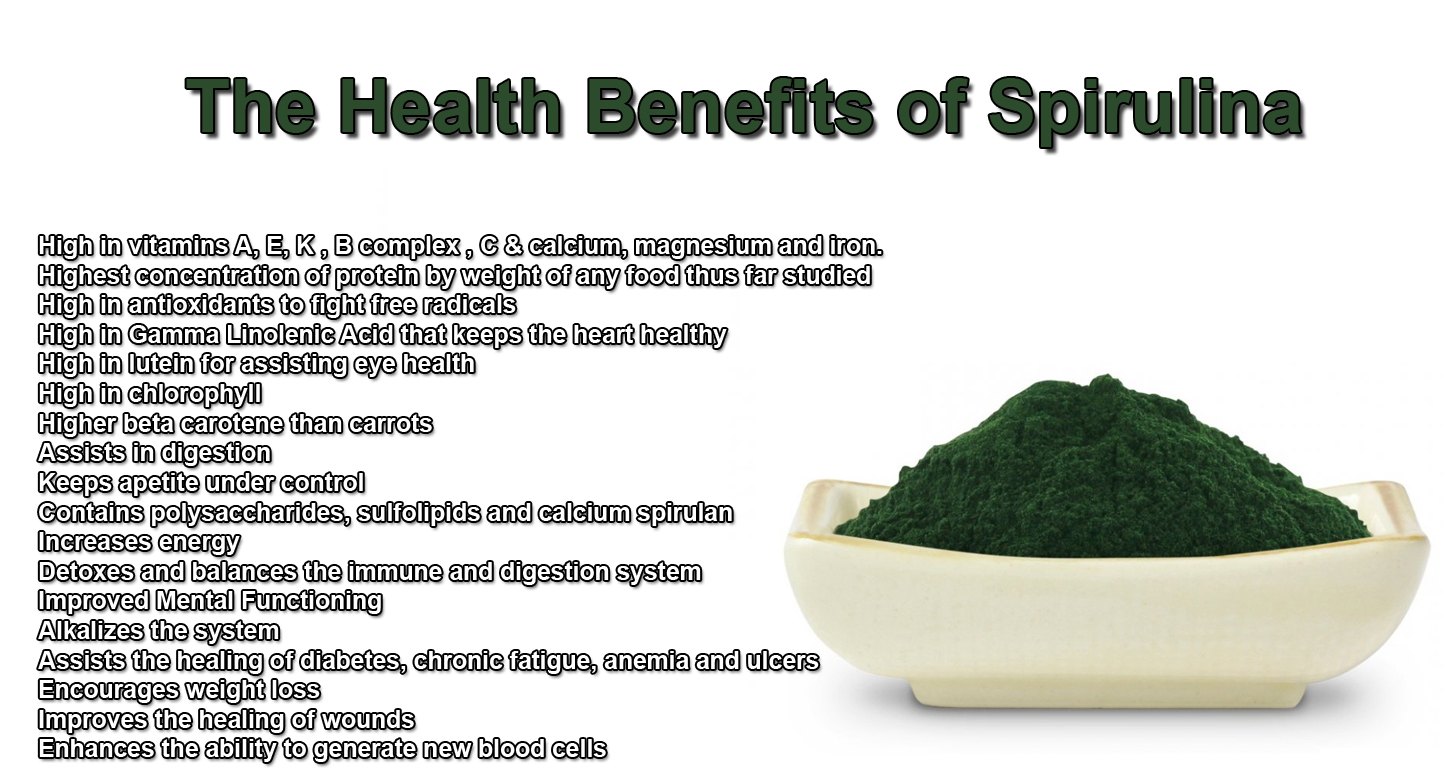
Spirulina is about sixty percent complete, highly digestible protein. Spirulina contains every essential amino acid. It contains more beta carotene than any other whole food: it is the best whole food source of gamma linolineic acid (GLA); it is rich in B vitamins, minerals, trace elements, chlorophyll and enzymes; it is rich in other valuable nutrients currently being studied in more detail by scientists, such as cartenoids, sulfolipids and many others.
Spirulina is rich in many nutrients missing in the common diet, consuming Spirulina can greatly improve overall wellness.
Anti Oxidants in Spirulina
Oxygen is, of course, important to life, but like most things there are good and bad aspects of it. While oxygen is vital for metabolism, when it combines with complex metabolic molecules in the body it produces things called free radicals.
Poor diet, strenuous exercise, pollution, and bacterial infections can all cause a rise in free radicals. The stress levels of modern living, pollution and mass produced food, as well as poor lifestyle and diet tend to increase the amount of free radicals in the body to dangerous levels. The result is cellular damage causing premature aging, wrinkles, bad skin, black rings under the eyes and sometimes serious illnesses.
Anti Oxidants are a generic term for nutrients that mop up free radicals in the body and neutralise them. Many antioxidants are Vitamins and have multiple benefits, such as vitamin E and vitamin C, but the best anti oxidants are the carotenoids.
Carotenoids are the most powerful anti oxidants known. Carotenoids are what give plants their colour. The most powerful carotenoid is Astaxanthin, the next most powerful is Beta Carotene. On this website you will find a lot more information on both these important anti oxidants. Spirulina is the richest known natural source of beta carotene.
Spirulina has a wide spectrum of carotenoids, many have not been investigated for their benefits, the most important ones that have are:
Beta-Carotene
Spirulina is the richest known natural source of Beta Carotene.
Beta Carotene is a precursor to vitamin A and has many possible health benefits.. Beta-Carotene can be converted by the body into retinol is referred to as provitamin A carotenoids. Hundreds of different carotenoids are synthesized by plants, but only about 10 % of them are provitamin A carotenoids.
Beta-Carotene is a powerful anti-oxidant helping the human body in many ways, it's an Anti Oxidant and possible protector of cells.
Recent reports show natural Beta-Carotene is important in the formation of bones and teeth. No vitamin overdose can occur with natural Beta-Carotene. About two decades ago, it was reported that beta carotene offered a possibly notable measure of photoprotection to individuals with porphy.
Beta-Carotene also helps to protect the eye and vision.
Beta-Carotene is an antioxidant and boosts the immune system.
Beta-Carotene is often low during the more advanced stages of HIV. Supplementation of 300,000 IU daily may help increase the number of CD4+ cells found, CD4+ cells are a type of white blood cells that are low in AIDS patients.
Low Beta-Carotene levels are often associated with the development of lupus. Taking a liquid supplement may help ease some of the arthritic problems associated with this condition. Eating foods with beta carotene also lowers the risk of macular degeneration.
Vitamin A is a major source of beta carotene and has also been shown to reduce the risk of cataracts. The most common Beta-Carotene supplement intake is probably 25,000 IU (15 mg) per day, though some people take as much as 100,000 IU (60 mg) per day.
Zeaxanthin
Zeaxanthin is a bioflavonoid (or flavonoid), which is a type pigment found in almost all coloured plants fruits, and vegetables. Bioflavonoids provide the body with anti-inflammatory and antioxidant protection, and are one of the main reasons fruits and vegetables are so healthy to eat. Zeaxanthin belongs to a group of bioflavonoids known as carotenoids, a group that is further subdivided into two groups: carotenes and xanthophylls. Zeaxanthin is one of the xanthophylls, which are found most abundantly in dark, leafy green vegetables, and are crucial to the good health of the eyes. The retina of the eye actually contains a lot of zeaxanthin, which is why it is so important to include this carotenoid in your diet.
Zeaxanthin helps protect the eye from ultra-violet (UV) damage, and prevents free-radical damage to the retina and the lens of the eye that is associated with diabetic retinopathy, macular degeneration, cataracts, and gl.
Cryptoxanthin
Cryptoxanthin, also known as beta-cryptoxanthin, is a member of the carotenoid family, a group of flavonoids that provide colour and flavour to fruits and vegetables. Carotenoids are proven antioxidants, and they protect the body from free-radical damage.
Like alpha- and beta-carotene, cryptoxanthin is a powerful antioxidant that can be converted to active retinol, or vitamin A, in the body. Vitamin A is crucial to the maintenance of healthy vision, reproduction, and body tissues.
Phycobiliprotein
Phycobiliprotein has been recently reported to exhibit a variety of pharmacological properties. In this regard, antioxidant, anti-inflammatory, neuroprotective and hepatoprotective effects have been experimentally attributed to Pc. When it was evaluated as an antioxidant in vitro, it was able to scavenge alkoxy, hydroxyl and peroxyl radicals and to react with peroxinitrite (ONOO-) and hypochlorous acid (HOCl).
1. The nutrient could help ward off the effects of bad cholesterol, whilst also keeping arteries clear.
2. The nutrient may help combat arthritis and osteoarthritis aches.
Lutein
Lutein is a potent antioxidant, and, because of this, can counter free radical damage.
Lutein is concentrated in the retinas of your eyes and is necessary for good vision. A diet rich in lutein may lower your risk of developing cataracts and macular degeneraton. It works best in synergy with other nutrients, particularlly zeaxanthin and the mineral zinc, another reason for taking this in a food form, such as Spirulina.
Protein is important during a weight loss program because it plays an important role in your metabolic rate, improves muscle fitness, helps with the immune system, assists antioxidant activity, builds good cholesterol, helps insulin function (which is important for metabolising sugars in the body) as well as leptin function. All of this assists in weight loss. In fact for weight loss 10% of your diet should be protein, the rest a balance of healthy food.
Protein is made up of various amino acids. In terms of weight loss, scientists are finding that the most important amino acids are the branch chain amino acids, especially leucine. If you get your protein intake high enough, especially in proteins that are rich in leucine, a number of very interesting things happen that can activate a sluggish metabolism and result in weight loss. Spirulina is extremely rich in highly digestible protein and the relevant amino acids.
Spirulina also contains polysachaarrides (complex sugars) that provide energy and burn slowly as well as essential oils and is 60-70% highly absorbable protein, so, when taken in conjunction with a varied and healthy diet can help boost your metabolism, improve insulin function and keep you healthy while dieting.
Spirulina in particular, has a primitive structure with few starch storage cells and cell membrane proliferation, but rich amounts of ribosomes, the cellular bodies that manufacture protein. This particular arrangement of cellular components allows for rapid photosynthesis and formation of proteins. The lack of hard cellular walls assures that Spirulina protein is rapidly and easily assimilated by the body. The protein in Spirulina is complete, containing all the essential amino acids, and many none essential ones.
Spirulina contains all essential Amino Acids and many non essential, the protein is in a highly digestible form, it is up to 60% Protein.
Carbohydrates consist of Polysaccharides (complex carbohydrates) primarily Rhamnose and Glycogen which do not affect blood sugar levels adversely.
© wisenatural.in | Images: Wise Natural | Design: Web Team